The Invisible Radius
Acronyms and terms:
None used that need expansion. This post is about human closeness, injury, fear, and survival, so I have kept the alphabet soup outside the kitchen.
The people who hurt you the most are rarely the people standing outside the gate with a stick. That would be almost convenient. You could see the stick. You could close the gate. You could shout something brave from the balcony and feel, for a few seconds, like a cinema hero with less hair and more acidity.
The real damage usually arrives with familiar footsteps.
It knows where you keep the cup. It knows your weak hours. It knows which sentence will make you quiet. It knows the small trapdoor under the ribs.
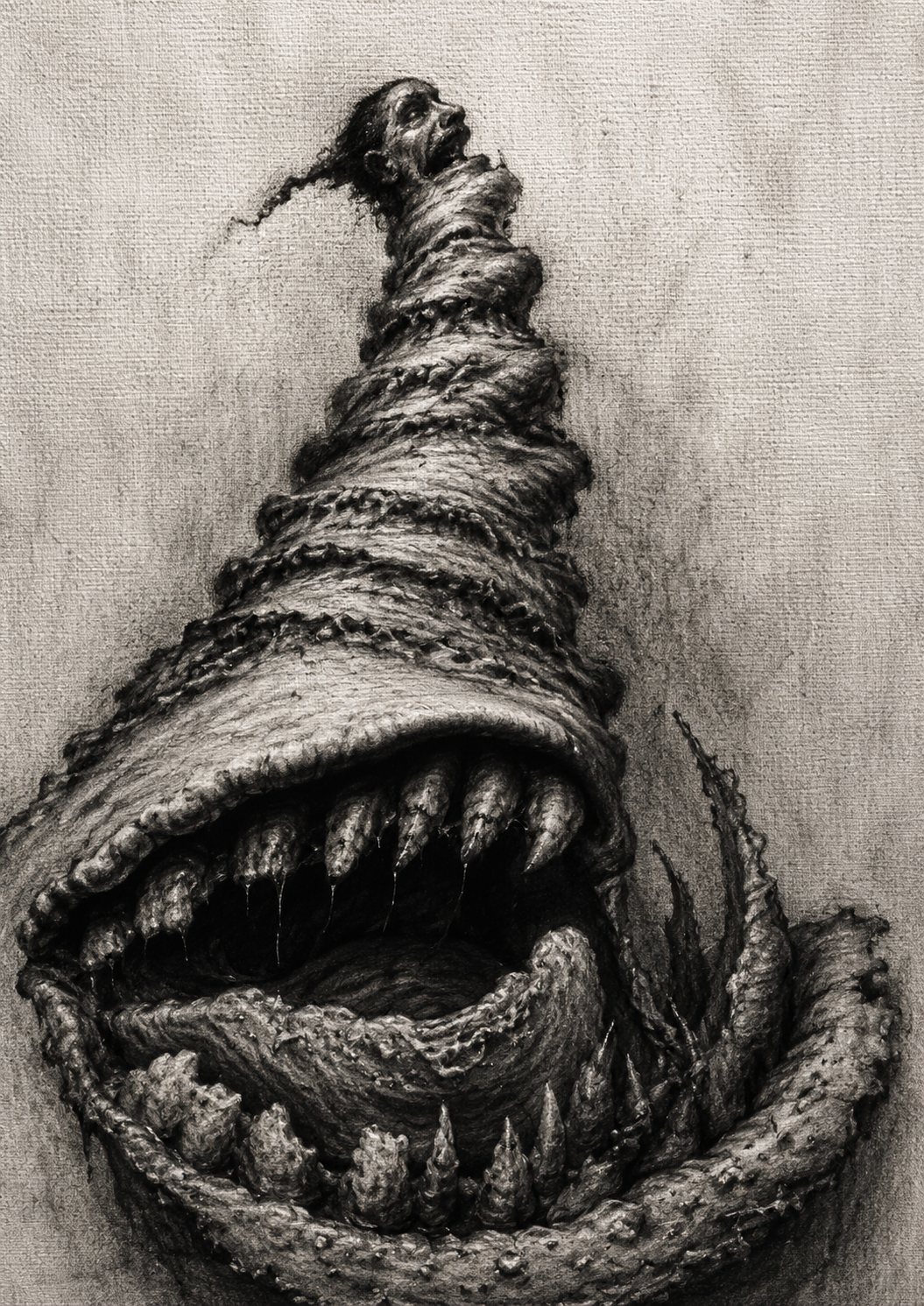
This has been one of the most unpleasant discoveries of my life: the people I brought close through love, trust, loyalty, affection, family, friendship, or that foolish human hope that somebody may finally understand me, have often been the ones who hurt me most. Not always with villain music playing in the background. Life is not that generous. Sometimes they hurt by leaving. Sometimes by staying. Sometimes by using an old wound as a handle. Sometimes by doing nothing at precisely the moment when doing nothing becomes its own form of cruelty.
So now I have a radius.
Invisible, but real.
You will not see it on Google Maps. No red border, no municipal notice, no bamboo barricade like the ones they put up during road repair and then forget for three monsoons. But it is there. Around me. A quiet circle. Not hatred. Not arrogance. Not “I am above people,” which would be a magnificent lie and therefore unavailable to me. More like: please do not come rushing in with muddy shoes. The floor has cracks.
People misunderstand this.
They think distance means coldness. Sometimes it does. But sometimes distance is only an old umbrella kept near the door because the sky has behaved badly before. A man gets wet enough times and eventually he begins to study clouds. He may become boring about clouds. He may mention clouds when everyone else is discussing biryani. Still, he is not mad to carry the umbrella.
My radius began as instinct. Then it became habit. Then it became architecture.
This is how a limited life is built. Not in one dramatic decision, but by a hundred small withdrawals. One declined phone call. One avoided visit. One message not answered immediately because even the ping feels like someone tapping on a bruise. One social invitation that looks harmless to others but to you appears with hidden charges, like a mobile plan written by a demon in eight-point font.
I live alone in the shanty boondocks of Calcutta, where the day often begins with crows shouting like unpaid political commentators, pressure cookers whistling in nearby flats, motorbikes coughing in the lane, and somebody somewhere proving that a plastic chair can be dragged across a floor with the emotional force of a constitutional crisis. It is not exactly Alpine solitude. It is noisy, sweaty, crowded, and yet, inside the room, one can be completely alone.
That is the Calcutta trick. Too many people outside. Too few people inside.
By afternoon, the room warms up like leftover rice in a steel container. The phone lies nearby. Dangerous little rectangle. It can bring work, insult, memory, unpaid bills, old affection, new disappointment, and breaking news about the world misbehaving again, all before tea. One moment you are checking the temperature. Next moment you are reading about some fresh catastrophe in politics, war, climate, markets, technology, or the latest celebrity sermon on resilience delivered from a sofa larger than my monthly budget.
Then the mind begins its own news bulletin.
That is where bipolar enters, not as a dramatic costume but as bad weather inside the house.
The bipolar brain is not simply “mood swings,” that cheerful little phrase people use because it sounds like a playground item. A swing is fun. This is more like discovering that the staircase has moved since morning. Some days the brain trusts too fast. Some days it suspects too much. Some days it turns a small silence into a full police investigation. Some days it ignores a real warning because hope has put on perfume and started speaking in a convincing voice.
This is the worst part: even my own brain is not always a reliable witness.
Imagine trying to judge people while your inner judge sometimes arrives drunk, sometimes frightened, sometimes overconfident, and sometimes convinced that every pigeon on the windowsill is part of a conspiracy. It would be comic if it did not cost so much.
So I limit exposure.
That sounds clinical. It is not. It is ordinary. Like not keeping too much kerosene near a stove. Like not lending money you cannot afford to lose. Like not eating roadside phuchka when your stomach is already planning a revolt. Wisdom? Maybe. Cowardice? Also maybe. Survival often comes without a clean label.
I did not choose a limited life because I dislike life. That is the joke, and not a small one.
I chose it because I still have some wish to remain intact.
People say, “You should open up more.” They say it kindly, and sometimes kindness itself has a way of becoming a blunt instrument. Open up. Meet people. Trust again. Move on. Such tidy verbs. They sit in the mouth nicely. But open what? To whom? Under what warranty? With what refund policy if the person enters, rearranges the furniture, breaks the good cup, and leaves you sweeping emotional glass at three in the morning?
No one answers that part.
The world is full of cheerful advice given by people who do not have to live with the consequences. It is like a man standing dry under a shop awning telling you, in a generous mood, that rain is only water.
Yes. And drowning is only breathing done incorrectly.
Still, I must be fair. My radius protects me, but it also steals from me.
That is the catch.
A limited life limits injury. It also limits surprise. It limits the small ridiculous pleasures that come only from people: a sudden laugh, a shared joke, somebody remembering how you take tea, somebody saying “I understood” and, for once, actually understanding. To avoid being cut, one may stop touching sharp things. Unfortunately, the world has hidden many soft things among the sharp ones.
This is why isolation is not a noble solution. It is not a Himalayan cave. It is not spiritual discipline. It is more like living in a room where the fan works only at speed two and the switch gives a small electric shock if touched carelessly. Manageable, but not ideal. You learn the angle. You adjust. You stop complaining because who is listening anyway?
Some evenings, when the light turns yellow and the lane outside smells of frying oil, damp concrete, and distant drains doing their lifelong research in public health, I wonder whether I have become too careful. There is a kind of fear that starts as a guard dog and slowly becomes the landlord. First it protects the house. Then it decides who may enter. Then it starts barking at the owner.
This worries me.
But then memory opens its old register.
There they are. The names. The scenes. The tiny humiliations that never looked large enough to report but were large enough to alter the furniture of the soul. The moment someone used affection as leverage. The moment someone withdrew warmth like a shopkeeper pulling down shutters. The moment trust became a receipt for future damage.
You remember.
The body remembers too. The stomach tightens before the mind has finished making its argument. The chest knows. The throat knows. The hand hovering over the phone knows. Trauma is not always a grand tragic monument. Sometimes it is a hesitation before pressing “send.”
And then there is shame, that old Calcutta tenant who never pays rent and refuses to leave.
Shame says: you are difficult.
Shame says: others manage.
Shame says: look at people your age; they have homes, spouses, savings, social lives, respectable blood pressure, and shirts that look ironed by civilization itself.
Shame says: you are hiding because you failed.
Maybe there is some truth in it. Shame is not always stupid. It is merely cruel with partial data. Yes, I am hiding. Yes, I am difficult. Yes, my life is smaller than I once imagined when I was younger, thinner, less dented, and under the mistaken impression that education, sincerity, and hard work came with a guaranteed return policy.
But failure is not the whole story.
A burnt hand pulling back from flame is not a moral collapse. It is a nervous system doing bookkeeping. It is flesh saying, “We have records.” It is the body refusing to attend another seminar on optimism.
My invisible radius is not perfect. People still cross it. Memory crosses it. Loneliness crosses it with no ticket. The bipolar brain crosses it wearing my own face. Even in a small life, risk leaks in under the door like rainwater.
That is the insult. You reduce the world and still cannot fully escape it.
But perhaps the goal is not escape.
Perhaps the goal is a livable distance. Not a fortress. Not an open field. A verandah, maybe. A place where one can sit partly inside and partly outside, with tea going cold, watching the world pass by without inviting every passerby to inspect the wound.
I can be lonely and still be careful.
I can miss closeness and still fear it.
I can know that isolation is unhealthy and still know that too much exposure has been worse.
Both things can be true. Human life is annoying that way. It refuses to become a clean exam answer.
So for now, I keep the radius.
Not as a declaration of greatness. Not as drama. Not as punishment for the world. I keep it the way a poor man keeps a spare matchbox during monsoon, wrapped carefully in plastic, because he has learned that dampness comes first, philosophy later.
Maybe someday the circle will soften. Maybe a few people will be allowed closer. Slowly. Not with slogans. Not with fireworks. More like testing an old chair before sitting fully on it.
For now, I live small.
Small is not always beautiful. Sometimes small is just small. But small can be survivable. Small can reduce the number of doors through which trouble enters. Small can leave enough energy to make tea, answer one email, pay one bill, write one paragraph, and remain, against the available evidence, alive.
The radius is not proof that I do not want love.
It is proof that love, in my life, has too often arrived carrying a knife wrapped in flowers.
And yet some foolish, stubborn, human part of me still waits for a different visitor.
That part may be naïve.
Or it may be the last lamp in the room.